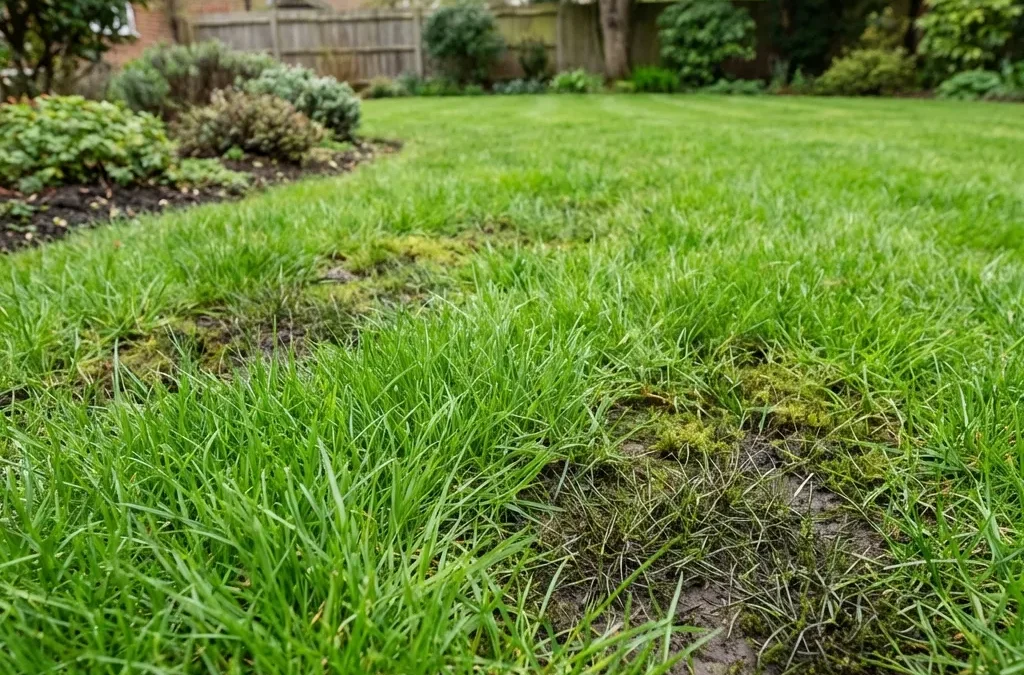
Moss is one of those lawn problems that tends to creep in quietly. One year the grass just looks a bit thin, nothing too worrying. Then, almost before you notice, soft green moss starts spreading across the damp spots. For many homeowners in West Sussex, moss control can feel like a fight that never really ends. Frustrating, honestly. The good news is that it’s usually not as bad as it first appears. Moss isn’t really the enemy most of the time. It’s better to see it as the lawn telling you something isn’t quite right. Once that message is clearer, dealing with moss often feels easier and much less stressful. Taking a thoughtful approach helps the grass get stronger over time, instead of just hiding the problem.
Local conditions have a lot to do with why moss shows up so easily here. Mild winters and regular rainfall make it easy for moss to settle in. Add compacted soil, heavy shade, or poor drainage that stays wet, and moss can spread fast. Very fast. Most people try quick fixes first. They rake it out or apply a moss killer, and the lawn looks better for a short while. Then the moss often slowly returns, and the whole cycle begins again. Annoying, and it can add up in cost.
This guide focuses on stopping moss by improving the lawn from the ground up. There are no shortcuts. It explains why moss appears, how soil condition affects grass growth, and what tends to work over the long term, including organic‑friendly options. It also shares practical steps used by professional lawn care services in Chichester and across West Sussex, based on real lawns and real conditions.
Why Moss Appears in Otherwise Cared-For Lawns
Moss doesn’t usually appear for no reason. It tends to show up where grass is already struggling. Instead of a sudden takeover, it’s more of a quiet sign, often easy to overlook, that something under the surface isn’t quite right. In my view, moss is usually pointing to an underlying problem rather than causing one by itself.
Compacted soil is one of the most common reasons. Regular foot traffic and mowing when the ground is wet can squeeze soil particles tightly together, which is common in clay-heavy areas. When this happens, air and water have a hard time reaching grass roots, nutrients stop moving properly, and growth slows. Moss copes with this much better. Since it doesn’t depend on true roots, compacted soil barely affects it, so it can move in with ease.
Low soil fertility also plays a part. Lawns that lack nitrogen often thin out over time, leaving bare spots behind. Once those gaps form, moss spores have space to land and spread. Soil acidity matters too, but guessing can backfire. Adding lime without a soil test can push pH too far and lead to new issues.
Climate matters as well. In West Sussex, lawns often sit in damp, shaded areas. Tree cover or north-facing slopes stay moist and get less light. That mix usually favors moss more than grass, as many homeowners see.
Here are the key conditions that encourage moss growth:
| Lawn Condition | Impact on Grass | Moss Risk |
|---|---|---|
| Compacted soil | Weak root growth | High |
| Poor drainage | Waterlogged surface | High |
| Low nitrogen | Thin grass cover | Medium to High |
| Excess shade | Slow growth | High |
| Incorrect pH | Nutrient lock-up | Medium |
Turf specialists often say moss is a sign of another issue, not the main problem. This comes up a lot, and Dr Nick Baxter from the Royal Horticultural Society explains it clearly, which makes it worth considering.
Moss is a symptom of problems in the lawn, not the problem itself.
Soil Health Comes First in Moss Control
Healthy soil is usually the quiet base of a good lawn. When soil falls out of balance, extra feeding or careful mowing rarely keeps moss away for long, it often comes back anyway. That’s why professional lawn care usually starts below the grass, where the real problems tend to be. If moss has been hanging around for years, this is often what’s been overlooked.
A soil test is a small step that often delivers more than people expect, and it’s easier than most assume. A proper lawn soil analysis shows pH levels and overall nutrient balance. Most turf grasses grow best when pH sits between 6.0 and 6.5. When soil moves outside that range, grass can struggle to take in nutrients, even if they’re already there. This is frustrating, and very common in everyday lawns.
| Soil Factor | Ideal Range | Effect on Lawn Health |
|---|---|---|
| Soil pH | 6.0, 6.5 | Supports nutrient uptake |
| Nitrogen level | Moderate | Encourages dense growth |
| Organic matter | 3, 6% | Improves structure and drainage |
Aeration matters just as much, and is often where things start to change. Hollow tine aeration removes small plugs of soil, easing compaction and opening things up. Water drains better, air reaches roots again, and puddles stop hanging around after rain. As grass fills in, it often crowds moss out on its own.
Steven Rackliffe from the University of Connecticut Extension explains why this works so well.
The first step to moss control is to promote healthy dense turf through proper turfgrass management. Soil samples should be taken and sent to a soil laboratory for analysis.
In West Sussex gardens with clay soils, aeration paired with a light sand top dressing often improves drainage and firms up the surface. It’s a simple approach, but in most cases, it works.
Mechanical and Organic-Friendly Moss Control and Removal Methods
As soil conditions start to improve, hands-on removal often begins to show real results. In many cases, steady effort pays off. Mechanical methods clear away moss and help the lawn recover, letting more light reach the surface and allowing air to move through the soil, conditions grass usually responds to well.
One of the most effective options is scarification. Using blades or tines, it pulls moss and built-up thatch from the surface, opening the lawn so light can get in and air can move again. Autumn is often the best time for this. Grass still has a chance to recover before winter, and while the window can be narrow, it’s a good option when conditions are right.
Iron-based moss treatments are another option to look at. They darken and dry the moss, which makes it easier to loosen and remove. Older chemical products caused concern, but iron-based treatments are now widely accepted in organic-friendly lawn care when used with care. Timing and moderation usually matter more than people expect.
This short video gives a clear visual overview of moss removal and the steps that help the lawn recover afterward. It’s easy to follow, even if you’re new to lawn care.
Common mistakes to avoid include:
- Removing moss without fixing drainage or soil compaction, which can cause moss to return quickly
- Cutting grass too short after treatment or applying fertiliser before the moss is fully cleared
Peter Landschoot from Penn State Extension explains why follow-up care has such a strong effect on long-term results, and it’s something people often miss.
Attempts to eradicate moss from a lawn are rarely effective unless provisions are made for a dense, actively-growing turf to take its place.
Scarification should always be paired with overseeding and feeding so grass density can build back properly, skipping either step often leads to thin patches later on.
Mowing, Feeding, Seasonal, and Drainage Lawn Care Choices
Real improvements usually show up as the seasons change. Day-to-day lawn habits affect how well grass holds its ground and how moss behaves, even when progress feels slower than you want (and it usually does). Small changes can matter more than they seem, and given time, the lawn starts to respond in clear ways.
One of the easiest fixes, in my opinion, is mowing height. Cutting grass too short weakens it quickly and leaves bare soil behind (which moss enjoys). Letting the grass stay a bit taller helps it spread and cover the surface, blocking moss spores before they settle. For most lawns, this means cutting no more than one third of the blade at a time, even during fast growth. Simple rule. Easy to follow.
Feeding works best when it fits the season. Spring feeding helps grass bounce back from winter stress and restart growth (often patchy at first). Summer feeding should be light, especially in dry weather. Autumn feeds support strong roots rather than soft, leafy growth. Same lawn. Different needs.
Organic fertilisers release nutrients slowly. This steady pace supports healthier grass and avoids sudden growth spurts that can lead to disease or moss (which happens a lot). No rush. Just balance.
Drainage matters too. Clearing lawn edges, improving soil structure, and skipping mowing when the ground is wet can reduce standing water. In shady spots, careful pruning can let in more light without removing established trees (which usually isn’t needed). Small changes. Long-term results.
When Professional Lawn Care Makes Sense
The biggest difference usually shows up with tough lawns: large areas or heavy compaction often do better with expert help (especially when the ground feels as hard as concrete). That’s where professional lawn care really makes sense. Specialist tools and real hands‑on experience can do more than most home equipment, and there aren’t any quick fixes here, at least not ones that last.
It’s also very much a step‑by‑step process. Services like hollow tine aeration and lawn scarification are designed to work together, and soil analysis helps decide which treatments are actually worth doing. With regular visits, small issues often get sorted before they grow into bigger problems, which can happen quickly.
For property managers, this kind of care can help protect value across multiple sites. Homeowners often like the time saved, the lower risk of costly mistakes, and access to organic and child‑safe options. In West Sussex, local knowledge matters too, since soil types and rainfall patterns often shape results, like finally easing compaction in stubborn ground.
Putting It All Into Practice for a Healthier Lawn
The main goal is steady improvement, not a quick makeover, and that usually comes from letting care work with nature. When the soil stays in good shape, grass grows thicker, and upkeep is regular, moss often fades into the background over time. Simple, steady care usually works better than quick fixes.
What do you notice when you slow down and really look at the lawn? Many people see damp or shaded spots, plus areas worn down by foot traffic. Testing the soil before adding anything can help explain what’s happening. A practical approach is to improve the soil by aerating, then remove moss by hand or with tools. After that, overseeding and a suitable feeding plan help the grass recover, step by step.
Feeling overwhelmed is common, and getting professional help can make things easier. Still, lawns rarely need instant change. In most cases, long-term care matters more, leading to turf that looks better and stays greener through the seasons.