A healthy lawn should feel simple. You mow it, enjoy it, and usually expect it to stay green without much effort (that’s the hope, anyway). For many homeowners in West Sussex, it doesn’t work out like that. Moss can spread fast. Weeds seem to appear overnight. Grass may look thin, patchy, or even feel hard underfoot in places, which isn’t great if you like walking barefoot. It’s frustrating, and these are very common lawn problems that get annoying quickly when you’re not sure what’s actually causing them.
That’s where this guide comes in (and yes, that really does matter). It looks at the most common lawn problems across Chichester, West Sussex, and nearby areas, using examples you’ll likely recognise from your own garden. You’ll learn why these issues happen, how to spot early warning signs before things get worse (they often start small), and what really helps fix them. This includes improving soil conditions, getting the timing right for treatments, and knowing when professional lawn care services make sense, especially if safe, organic‑friendly options matter to you. Less guesswork and clearer answers.
What often gets missed is how much local conditions affect results. Heavy clay soil slows drainage. Coastal moisture encourages moss. Long, wet winters put lawns under real pressure. Quick fixes usually deal with surface problems, not what’s going on below the soil. A better approach uses soil knowledge, good timing, and some patience, so results last through the year (and yes, it often takes time).
From there, it’s easier to read how your lawn looks and feels, pick treatments more carefully, and keep things safer for family, pets, and the wider environment, which feels like a win all round.
Why Moss and Weeds Take Over Weak Grass in Common Lawn Problems
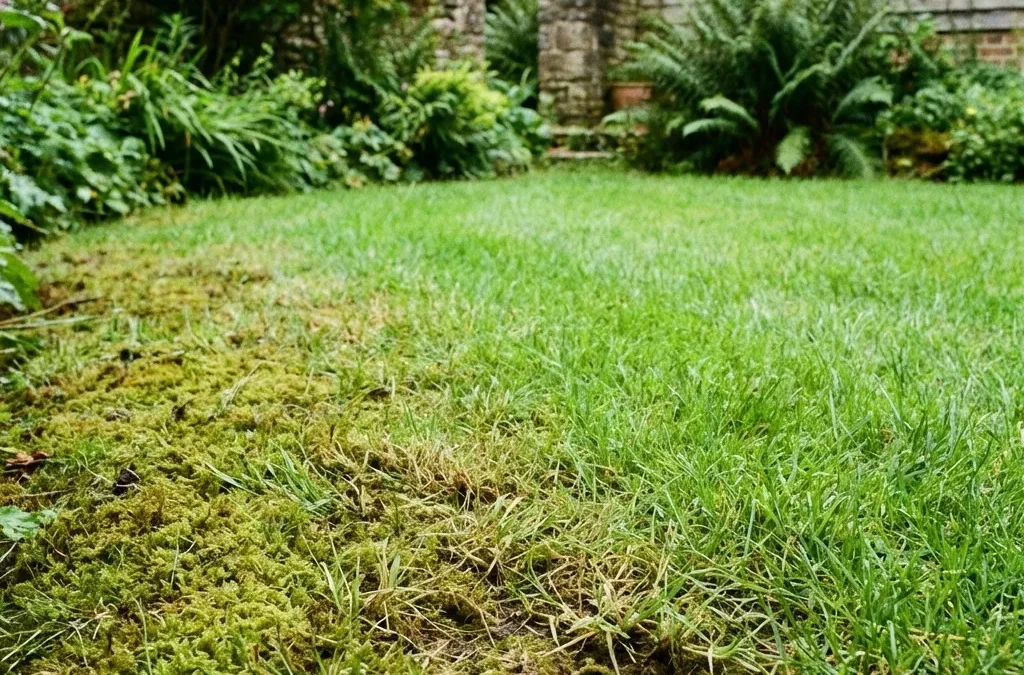
Moss and weeds showing up in thin grass usually aren’t random. They act more like quiet warning signs, even if that’s easy to miss at first. A lawn often points to problems just below the surface, and they don’t always make themselves obvious. In West Sussex, this is common because regular rainfall mixes with clay‑heavy soil. When water sits near the surface for long stretches, oxygen around the roots drops. Grass doesn’t collapse overnight, but it often weakens slowly, losing strength bit by bit.
Moss does best where grass is already struggling. Shade can matter, but compacted soil and poor drainage usually have just as much impact, and often more than people expect. Once moss settles in, it takes up light and space that grass needs to bounce back. It also holds moisture right at the surface. That setup works well for moss, while grass stays under strain. Before long, moss has the upper hand, and it’s rarely a fair fight.
Moss loves compacted, waterlogged soil. Late January / February can often be very wet, the perfect conditions for moss to thrive.
Weeds tend to appear for similar reasons. Clover is often one of the first, with daisies and yarrow commonly showing up alongside it. You’ll usually notice them where turf is thin and nutrients are low. In my view, weeds aren’t the original issue. They arrive because the grass was already weak. These tougher, fast‑growing plants spot open ground and move in quickly, long before grass can spread back.
Grass loses strength when roots can’t breathe or reach nutrients properly. Compacted soil blocks airflow and slows how water and food move through the ground. Roots stay shallow, growth slows, and the lawn becomes fragile. Shallow roots also mean grass dries out faster in summer, adding more stress. Over time, these small pressures build up.
Here are the most common triggers seen locally:
- Clay soil holding too much water
- Regular foot traffic from children or pets
- Cutting grass too short
- Skipping seasonal feeding
| Lawn Issue | Primary Cause | Common Location |
|---|---|---|
| Moss | Compaction and shade | Front lawns, shaded areas |
| Broadleaf weeds | Low nutrients | Thin or patchy turf |
| Bare patches | Heavy use | Play areas and paths |
Fixing Compacted Soil with Aeration and Scarification
Soil compaction is one of those common lawn problems that often gets missed, mostly because it doesn’t show up overnight. You usually don’t notice it right away (most people don’t), but the signs slowly stack up. The ground feels hard when you walk on it, especially in high-use spots where people walk or kids play. Water sits on the surface instead of soaking down to the roots. Grass growth slows, and earthworms and other helpful soil life fade away because air can’t move through the soil like it should. It’s a quiet problem that builds over time.
In most cases, aeration is the main fix. Hollow tine aeration removes small plugs of soil, usually about 5 to 10 cm deep (roughly finger-length). These holes open space for air and water, and roots can finally grow downward instead of spreading across the surface. For clay-heavy soils, this step often makes the biggest difference by improving drainage and natural soil movement. It’s a simple process, but the results add up.
Scarification doesn’t replace aeration, it supports it, and they tend to work best together. By removing moss, dead material, extra thatch, and surface debris, scarification clears a path for light and nutrients to reach the soil. Thinning that layer also lowers the chance of fungal problems and helps mowing feel smoother and more even. The lawn surface just behaves better afterward.
A professional approach often matters more than people expect. Timing and depth both make a difference, and aftercare usually decides how well the lawn bounces back. Doing this work during frost or very dry periods, for example, can stress the grass and slow results.
After aeration and scarification, overseeding and light feeding (not heavy applications) usually help the most. Thin patches fill in before weeds move in, especially when the seed suits shade or foot traffic. Many homeowners skip aeration and rely only on feeding, which may improve color for a short time. Starting with the soil instead leads to steadier progress and stronger roots you can actually feel underfoot as time goes on.
Understanding Lawn Feeding and Nutrient Balance
The most interesting part of lawn feeding is that it usually isn’t about forcing fast growth. It’s about giving grass what it actually needs, at the right time of year, which is often earlier or later than people expect. Feeding can seem simple, but too much nitrogen at the wrong time often causes soft growth and raises the risk of disease. That’s how good intentions can go wrong quickly. A more balanced mix of nutrients supports deeper roots, steadier colour, and better tolerance to heat, cold, and wear. Over time, this approach usually matters more than chasing quick visual results.
During winter and early spring, feeding works best when it focuses on strength rather than speed. Is it tempting to push growth? Absolutely, but it rarely helps. Iron and potassium support toughness without encouraging weak, lush blades. They help lawns handle cold, foot traffic, and slow recovery, which is when grass often struggles most. They also deepen colour naturally, which can reduce the urge to add extra nitrogen later. A calmer approach usually gives more reliable results.
Iron strengthens the grass for late winter and can go some way towards controlling moss. Unlike spring feeds, winter feeds are low in nitrogen, so they won’t force weak, frost and disease-susceptible growth.
One simple way to remove guesswork is soil testing. It’s easy to do, powerful, and often ignored. Test results show pH, missing nutrients, and organic matter levels. Many West Sussex lawns come back low in potassium and iron. Slightly acidic clay soils can also lock nutrients in place, so grass can’t reach them, which explains why feeding sometimes falls flat.
With clear results, putting together a plan is much easier. Organic options like seaweed treatments and slow‑release feeds support steady growth and soil life. They’re safer around pets and children, reduce chemical use, and improve soil health over time. That long‑term view often pays off.
Common mistakes to avoid:
- Feeding without testing, or using the same product all year (it rarely suits every season)
- Applying fertiliser to turf that’s dry or already under stress
Smart Weed Control Without Heavy Chemicals
Weeds often get treated like the enemy, but that’s a bit unfair. In real life, they’re usually useful signals, and often more helpful than people expect. They show exactly where grass is weak or thinning, usually along busy walkways or compacted areas (the spots you walk on every day). These are clues hiding in plain sight. Blanket spraying can clear weeds for a short time, but it often ignores the real issue underneath. That usually leads to repeat treatments later and growing resistance, which nobody wants.
That’s why many modern lawn care services use a more targeted approach. Spot treatments cut down overall chemical use and help protect nearby plants you actually want to keep (flowers, shrubs, and so on). Mechanical methods, like brushing or scarifying, can remove many weeds without chemicals at all. No spray involved, which is a plus. As bare patches fill in, thicker grass often blocks new weed seedlings before they can settle.
In eco‑conscious gardens, this matters most during regular care, not quick fixes. New regulations now focus on lowering environmental impact, not just product totals. Many professional services reduce chemical use by up to 70% each year, helping protect soil life, wildlife, and nearby watercourses (it’s all linked).
The best results usually come from combining methods:
- Strengthen grass with feeding and steady care, so weak areas fill in
- Improve soil structure, then treat weeds only where they actually show up
When Professional Lawn Care Services Make Sense
One clear sign is when fixes don’t last. Some common lawn problems go beyond DIY attempts, especially if moss keeps coming back, drainage stays poor, or treatments fail more than once. That usually points to deeper soil problems, not just surface ones. In my view, this is where specialist equipment and good timing, which come from experience, start to matter. You can try again on your own, but the results often don’t last long.
A professional lawn assessment looks at the whole setup instead of just one issue. Soil type, compaction (often overlooked), shade, and how the lawn is really used all matter, from kids and pets to regular foot traffic. Professionals can also identify grass species and suggest blends that fit local conditions, which I think makes long-term care more realistic.
A professional lawn analysis can provide you with a clearer understanding of soil, compaction, and nutrient levels, helping you make informed decisions for the months ahead.
Local knowledge can make a real difference. Services in Chichester and West Sussex understand coastal and clay soils, along with seasonal timing shaped by local weather. Ongoing monitoring then helps spot small issues early, which works especially well for rental and managed properties throughout the year.
Turning Lawn Problems into Long-Term Health
Every lawn tells a story. It often shows through moss, weeds, bare spots, or thin growth. These aren’t failures. They’re clues about what’s happening below the surface, even when things look fine. Noticing those signs leads to better choices over time. Watching changes from season to season helps show what it needs.
Soil is where these patterns begin. Good structure and drainage let roots breathe and grow with less stress. Feeding works best when it’s done on purpose, not just by the calendar. Organic‑friendly methods often fit well. Quick fixes can look helpful, but they hide the real issue and let frustration come back.
Feeling stuck is common. Professional lawn care services can save time and reduce repeat problems by using science‑backed treatments and local experience. Even worn‑out lawns can recover, step by step.
A healthy lawn doesn’t need constant effort. It responds best to care given at the right moments, as seasons change, so timing matters.