
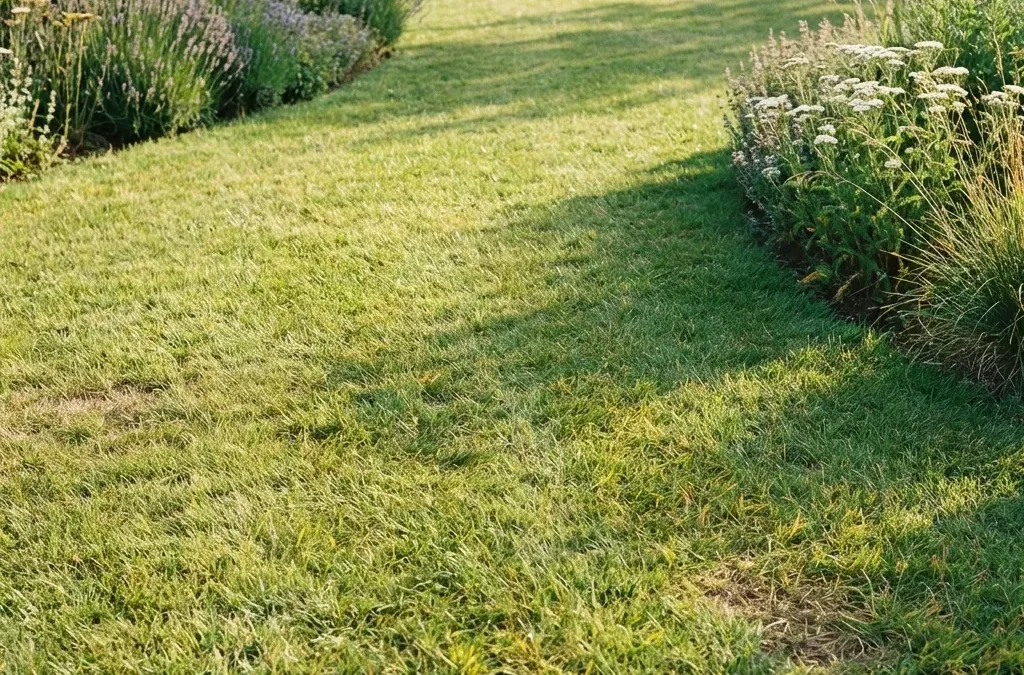
Long dry spells are now a normal part of life in West Sussex, and they rarely last just a few weeks. Summers often feel hotter than they once did, something most people notice quickly, and rainfall is much less predictable. That uncertainty keeps growing, so many homeowners and property managers worry about how to keep lawns looking decent without constantly soaking them. It’s an understandable worry. This is where drought‑resistant lawn care starts to matter more, especially during long, dry summers.
At its core, drought-resistant lawn care means changing how a lawn is looked after so it fits local conditions instead of fighting them, which often leads to stress and disappointment. Instead of pushing grass to stay lush through dry weather, the focus shifts to supporting it in calmer, more practical ways. With the right techniques, lawns often stay in fair condition, bounce back more quickly when rain returns, and rely much less on regular watering. This usually reduces strain on soil and roots and helps protect local water supplies. These are small changes, but over time they tend to make a clear difference.
This guide breaks drought‑resistant lawn care into clear, usable steps. It looks at why lawns struggle during drought, how soil health affects water use, and which everyday habits quietly shape results, sometimes more than people expect. Brown grass in summer, for example, is often a normal response rather than a sign something has gone wrong.
Everything here is based on UK conditions, with a focus on West Sussex soils and climate. Whether you’re managing a larger property or a family garden, these techniques usually help cut waste, improve soil health, and get steadier results as the seasons change.
Why Drought-Resistant Lawn Care Matters in the UK
Water pressure in the South East is no longer a distant idea; it’s something many areas now feel more often. West Sussex is already one of the most water‑stressed parts of England, which may sound dramatic but usually slips past people’s day‑to‑day thinking. Lawn watering, though, uses more water than many expect, and when millions of small gardens are added together, the impact is hard to ignore, in my view.
UK data helps explain why this builds up. Most households have some outdoor space, and a large share still includes grass, which can push demand up quickly (often faster than you’d guess). When dry spells arrive, lawns pull from the same limited supply needed for basics like showers, cooking, and cleaning. This overlap is often felt most during long, dry summers.
| Metric | Value | Year |
|---|---|---|
| UK households with private gardens | 78% | 2025 |
| Homeowners actively growing grass or plants | 62% | 2025 |
| Recent hosepipe bans in England | 7 water companies | 2022, 2023 |
These figures matter because gardens make up one of England’s largest managed green spaces. Even small changes to lawn care can cut water use across a region, and that usually doesn’t mean completely reworking a garden.
Climate patterns add another challenge. England is seeing drier summers more often, alongside wetter winters and heavier soil. Lawns that rely on frequent summer watering often struggle, while drought‑resistant lawn care helps grass cope with dry spells using less water and staying healthier for longer.
How Grass Really Responds to Drought
One of the biggest misunderstandings about lawns is what actually happens when dry weather sticks around. Many people worry as soon as grass turns brown and grab the hose (most of us have done it at least once). In many cases, though, that reaction isn’t needed. It’s a very common response, especially once summer heat settles in.
Grass has a built‑in survival mode called dormancy. When rainfall drops, growth slows right down and leaf colour fades. The plant shifts its energy toward protecting its roots until moisture comes back, basically waiting it out rather than dying off. This is normal for most UK turf grasses and usually nothing to stress about.
Of those extreme weather events, alternating between drought and prolonged rainfall, it’s drought that most concerns grass breeders. It’s about resilience. Drought is detrimental to plant growth, full stop.
Grass breeders now focus much more on resilience instead of nonstop, fast growth. For homeowners, this often leads to a more relaxed approach to summer lawn care, with less watering and much less stress, which is always a good thing.
We might have two weeks, three weeks, four weeks of drought. Most grasses can withstand up to four weeks without damage, so while leaves may go off-colour, few plants will die.
A brown lawn in summer is often just taking a break. It usually turns green again when conditions improve. Too much watering, on the other hand, can cause real problems by encouraging shallow roots and weaker growth over time. Quick fixes often lead to longer‑term issues.
Soil Health Is the Foundation of Drought-Resistant Lawn Care
If you want a lawn that handles dry spells better, it usually helps to start with the soil rather than the sprinklers. Good soil holds onto water for longer and moves it down to the root zone more easily, which often leads to better results. When soil quality drops, it can dry out fast, even when watering seems regular and the surface still looks fine.
Across West Sussex, many lawns deal with compacted soil, and it’s a common issue that builds up slowly. Regular foot traffic and repeated mowing press the ground down over time and reduce air spaces, so the problem isn’t always obvious. In this state, water often runs off the surface instead of soaking in where the grass actually needs it.
A practical way to improve this is hollow tine aeration. Removing small plugs of soil opens up channels that let water and oxygen move through more easily. It’s simple, but it works. Over time, roots tend to grow deeper and reach moisture that stays available for longer.
Organic matter matters too. Compost and organic topdressings help soil hold water, a bit like a sponge, and they support helpful soil organisms. As conditions improve, lawns often need less frequent watering.
Advice from the Royal Horticultural Society, which is widely trusted for soil structure guidance, suggests that improving soil is usually more effective than just watering more. Professional soil testing can also help by showing pH and nutrient levels, so treatments stay focused and avoid wasting water.
Smarter Mowing and Seasonal Lawn Habits
Mowing height is one of the easiest ways to save water, but it’s often overlooked. When grass is cut too short, it tends to dry out faster because the soil is left exposed to sun and wind, which is a rough combination. That exposure adds stress, and problems usually show up quickly. In my view, this is often where longer‑term lawn trouble quietly starts.
During dry spells, raising the mowing height can make a clear difference. Taller grass shades the soil, slows water loss, and helps keep roots cooler. Over time, that cover can lead to deeper roots, which helps the lawn handle low rainfall, even if you don’t notice changes right away.
What if too much is cut off at once? Scalping, or removing more than a third of the height, puts the lawn under pressure, especially in warm weather. Once you’re aware of it, it’s an easy habit to avoid.
Timing matters too. Grass usually copes better when it’s cut dry and away from peak heat. Cooler mornings or early evenings often work best.
Seasonal expectations matter as well. UK lawns aren’t meant to look perfect all year. Accepting slower growth and natural colour changes in summer often helps lawns handle dry conditions, even if they look a bit less neat.
Heavy feeding during dry weather is best avoided. Pushing growth increases water needs, which rarely helps. Organic, slow‑release options used at the right time support lawn health without adding extra strain, I think.
Watering Less but Doing It Better
The biggest change often shows up when watering happens less often, not more. When watering is needed, how it’s done usually matters more than how much water is used. Light, frequent watering can seem helpful, but it keeps moisture close to the surface. Roots stay shallow and dry out faster, which helps explain why lawns struggle.
Letting water soak in deeply and then waiting longer between sessions pushes moisture into lower soil layers. Roots grow downward to reach it and hold moisture longer, and a little patience often pays off.
Timing matters too. Early morning watering tends to work best. Cooler air limits evaporation, and leaves dry sooner, which often helps reduce disease.
Smart irrigation systems are more common now, but they’re not required. Simple timers still help prevent overwatering. What matters most is steady weekly habits and some restraint, which often leads to grass staying green longer between waterings.
| Watering Method | Root Depth | Water Efficiency |
|---|---|---|
| Daily light watering | Shallow | Low |
| Deep weekly watering | Deep | High |
| Early morning schedule | Stable | High |
Many property managers notice lawns handle stress better after cutting back on watering overall.
Choosing the Right Grass and Lawn Structure
Drought-resistant lawn care usually isn’t about bringing in unusual grass types. In my view, many continental varieties are bred for steady heat and often struggle with the UK’s constant weather changes. They can push through long, wet winters, then thin out quickly when conditions shift (you’ve probably seen this), which doesn’t suit most gardens.
Modern UK turf breeding takes a more balanced approach. Grasses are chosen to cope with dry spells, bounce back after stress, use nutrients well, and stay healthy over time. That balance leads to less watering and less fertiliser as the seasons go by, something most people notice quite quickly (and usually like).
Instead of removing a lawn, overseeding with the right mixes strengthens what’s already there. It fills bare spots, builds thickness slowly, and supports deeper, tougher roots. The change is subtle, but it makes a real difference.
Another growing change is making the lawn smaller. Adding borders or drought-tolerant ground cover reduces water use and gives the garden a clearer shape, so it feels planned rather than uneven (and often looks better).
Putting It All Into Practice in West Sussex
Drought-resistant lawn care usually works best when it’s treated as a long-term plan rather than a quick fix. There aren’t many instant wins, and one-off solutions often fade fast. It helps to start with the soil, then adjust mowing habits, and then rethink when and how often watering happens. That last step is easy to rush, but it often makes a real difference. Over time, small changes add up, sometimes more than expected.
When problems run deeper than the surface, which is common, professional services can help. Aeration, scarification, and soil testing deal with root-level issues like compaction or poor drainage. You can’t always see these problems, but you usually feel them underfoot. Organic-friendly treatments support soil life instead of pushing fast, weak growth, and that steadier approach tends to last longer.
For property managers, this approach often lowers ongoing stress and keeps water bills reasonable. Less constant fixing is a relief. Homeowners usually see lawns bounce back faster after dry spells and look good year after year.
Patience matters more than enthusiasm. Lawns change with seasons, not days. With steady care, they become tougher and better suited to modern UK summers.