
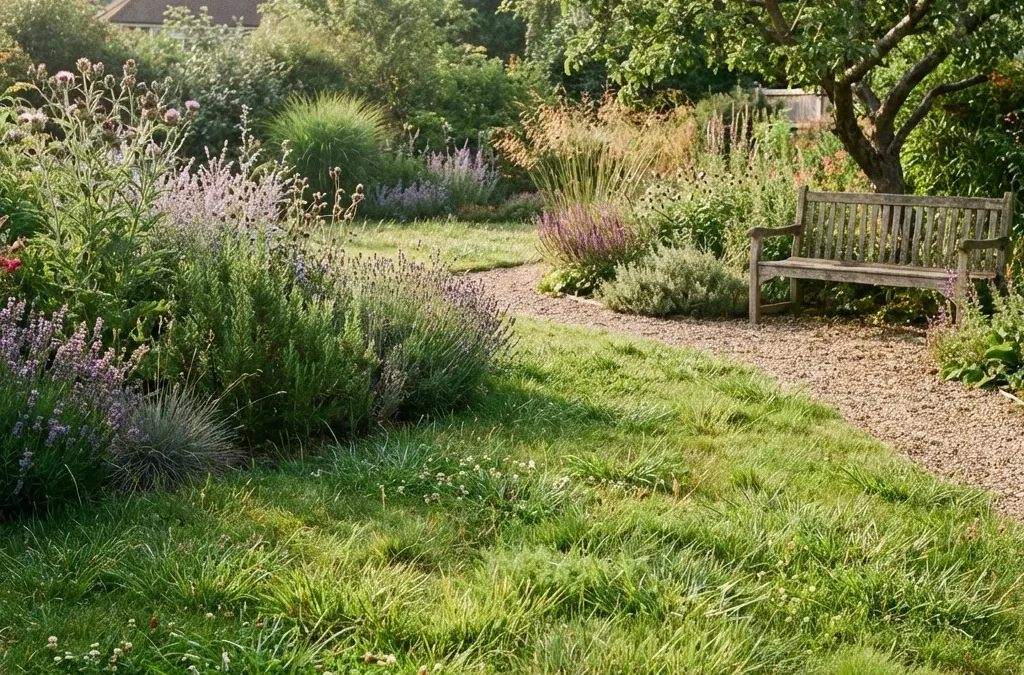
If you live in West Sussex, the change in summer weather is hard to miss. Hot spells are happening more often now, and they tend to last longer than they used to (it’s hard not to notice). Overall rainfall is lower, and dry stretches often drag on. Lawns that once stayed green through most summers now often turn brown by July, sometimes even earlier. It really does feel like a shift. This isn’t something homeowners caused, and it’s not likely to change anytime soon. Because of that, many homeowners and property managers are starting to explore drought‑resistant lawns that still look good while using much less water (and causing less stress, honestly). The good news is that smart, sustainable lawn care really can help. A drought-resistant lawn approach is becoming a practical solution for many in the area.
Instead of fighting the conditions, this guide looks at how to work with them. It explains how to create a lawn that matches local conditions, rather than constantly pushing against them. Soil health, grass choice, mowing habits, and organic treatments are all covered (the practical things you can actually control). In dry years especially, the basics often matter more than expensive products. There’s also a look at real climate data, common mistakes people often make, and the trends shaping lawn care for 2026 and beyond. Everything is written for West Sussex and nearby areas, because local details matter. If saving water, cutting back on chemicals, and keeping a lawn healthy long term matter to you, this guide is made for that.
Sustainable lawn care isn’t about giving up on a nice lawn. It’s usually about changing how it’s looked after. A different way of thinking, often a smarter one (and easier than it sounds).
Why Drought-Resistant Lawns Matter More Than Ever
Watering bans are often the first thing people really feel. As lawn care costs rise, homeowners across Southern England are being asked to use less water at the same time. That squeeze didn’t appear overnight. Drought isn’t unusual here anymore; it’s often the setting. Spring 2025 was the driest in England since records began in 1893, and reservoir levels dropped below safe limits, leading to emergency steps. It’s hard to brush off, especially if you’ve watched your garden struggle. Not great, in my view.
| Indicator | Value | Year |
|---|---|---|
| Driest spring on record | Since 1893 | 2025 |
| Drought permits issued | 46 permits | 2025 |
| Reservoirs below 50% | 15 reservoirs | 2025 |
These numbers help explain why traditional lawn care now misses the mark. Old routines don’t change easily and often break down fast. Regular watering and quick‑release fertilisers push rapid growth instead of strength, so when water runs short, these lawns are usually the first to thin out, lose colour, and look tired.
Of those ‘extreme’ weather events, alternating between drought and prolonged rainfall, it’s drought that most concerns grass breeders. It’s about the resilience. Drought is detrimental to plant growth, full stop.
A drought‑resistant lawn puts strength ahead of perfect looks. Deeper roots and healthier soil usually lead to steadier growth and fewer stressful moments, even if the lawn looks patchy for a week, like after a hot, dry stretch before the rain returns.
Soil Comes First: The Foundation of Drought-Resistant Lawn Care
When a lawn struggles in dry weather, the problem usually sits below the surface. Because you can’t see it, it’s easy to overlook, and that often means the issue sticks around longer than it should. Compacted soil makes it hard for water, air, and nutrients to move through. In West Sussex, this is common because of heavy clay soils. Even after decent rainfall, water often runs across the top instead of soaking in. If that sounds familiar, you’re probably noticing a real issue, not imagining it.
Things often start to improve once the soil is tackled first. Aeration is one of the simplest and most effective steps, even if it doesn’t look impressive at the time. Hollow tine aeration pulls out small plugs of soil, creating space below the surface. That space lets roots grow deeper instead of spreading out near the top. Deeper roots are usually better at reaching moisture during dry spells, which helps lawns cope more easily through summer.
Soil analysis is another useful step. Testing shows pH levels, nutrient balance, and organic matter. Without this information, feeding a lawn is mostly guesswork, in their view. With clear results, treatments can be more focused and lighter, which often cuts down on waste and avoids overusing chemicals.
Organic matter also matters. Compost-based top dressings help soil hold moisture and support helpful microbes. Over time, the soil becomes more active and supportive, so grass handles stress better. This often means less heavy watering and feeding, and it can also reduce moss, which prefers compacted, weaker soil.
Choosing the Right Grass for Dry Conditions
As drought becomes part of everyday weather, grass choices start to matter more than many people expect. A lot of older lawns depend on a small range of grasses that weren’t picked with today’s climate pressure in mind. During mild spells they can look great, but that success often doesn’t last. When hotter, drier periods hit, these lawns thin out fast, which is frustrating for anyone trying to keep them looking tidy.
The traditional lawn has just a few species of grass and is unlikely to be very drought‑resistant.
The biggest change with modern drought‑resistant lawns is the shift toward mixed species instead of one single grass type (that’s really the main difference). Tall fescue is often included because its deeper roots reach moisture lower down, so it usually needs less watering once settled. Drought‑tolerant ryegrass also works well in the UK. Clover is often added too; it stays greener in dry weather and improves soil health by fixing nitrogen.
| Grass Type | Root Depth | Water Need |
|---|---|---|
| Tall fescue | Very deep | Low |
| Perennial ryegrass | Medium | Medium |
| Clover | Medium | Very low |
A mixed lawn can look a bit different from the classic striped finish people expect, and that’s the trade‑off. Still, it handles dry spells and heavy summer use better. Over time, these lawns also support insects and build stronger soil, so for most people, the benefits are clear.
Smarter Habits for Lawn Mowing with Better Watering and Feeding
How a lawn is cared for often matters just as much as the grass type, and mowing height is where problems often start without much notice. Cutting too short is very common, and most people do it at some point. When grass stays too low, it dries out faster and the soil below heats up more than it should. That’s usually when stress shows up. Raising the mower even one setting can help the soil hold moisture, and the change is often visible pretty quickly. It’s a small adjustment, but lawns usually react well to it.
Watering is worth rethinking too. Light watering every day sounds helpful, but it often creates shallow roots that struggle later. Watering deeply less often pushes roots to grow down, which helps grass handle dry periods. Early morning tends to work best, since less water is lost to evaporation.
Feeding follows the same steady idea. Fast-release fertilisers cause quick growth that needs more water, so timing really matters. Slower, organic feeds support more even growth and stronger roots, especially in warm weather. Many sustainable lawn care programmes now use soil data and seasonal conditions to guide feeding, which makes it easier to stay consistent, like adjusting feed rates as temperatures rise instead of guessing.
Tackling Moss, Weeds, Compaction, and Thatch the Eco-Friendly Way
What usually catches the eye first are bare, thinning patches that seem to show up without warning. Dry lawns often struggle quietly at the start, then issues pile up quickly. When grass is stressed, moss and weeds tend to move in, and frustration follows soon after. Chemical fixes can feel useful at first, but they don’t always fix what’s going on below the surface. In many cases, they just swap one problem for another, and the side effects can hang around.
In cooler months, moss often settles into compacted, damp soil. By summer, it leaves behind weak areas, which is rarely good timing. A longer-lasting fix usually focuses on better drainage and balanced soil, including pH. Scarification clears moss and built-up thatch, letting air and light reach the soil and giving grass a better chance to recover.
In many lawns, weeds point to open space rather than being the main issue. Strengthening the grass to fill those gaps makes a difference. Overseeding with drought-tolerant grass helps it compete, and thicker turf makes it harder for weeds to settle in. This technique supports a drought-resistant lawn structure by improving resilience.
For homes with children or pets, organic treatments often feel like the safer option. They lower exposure to harsh chemicals while still supporting steady, long-term lawn health.
Planning Ahead: Lawn Care Trends for 2026 and Beyond
One big change is how homeowners think about summer stress. During extreme heat, lawns often turn a bit brown, and that’s usually normal and short-term, you’ve likely noticed this before. Instead of chasing nonstop green grass, the focus has shifted to helping turf make it through hot spells and recover once temperatures ease.
At the same time, lawn care is becoming more based on real information and less wasteful. Tools like soil moisture tracking and seasonal lawn checkups, along with custom treatment plans, are becoming more common. They help catch issues sooner, so small changes can be made before real damage sets in.
Smaller lawns with mixed plants and less mowing are also more common. They save time, water, and money, and leave extra space for wildlife to use.
Putting It All Into Practice
The main idea is that drought‑resistant lawns usually come from simple choices lining up, not a magic product. When soil health, grass type, and everyday care work together, lawns tend to stay stronger and need less hands‑on time. Nothing complicated, just the right basics working as they should.
In West Sussex, this often comes down to local experience. Soil and shade can change quickly even over short distances, and coastal areas add wind and salty air to the mix. Getting advice early can save time and help avoid expensive fixes later on.
Why deal with the same summer problems every year? Changing the plan can help. A practical starting point is soil testing. Aeration can reveal structure problems where small details make a real difference. Grass choices should fit today’s climate, with mowing and feeding adjusted to suit, so the lawn holds up better during the driest weeks.
Sustainable lawn care isn’t a trend. It’s simply a change in approach.